🤓 Being trans has to do with gender identity, not sex. The whole foundation of transgenderism as a concept is that sex and gender identity are independent elements of a person. So as a corollary (I think, haven’t used that word in a while lol), no non-sapient creature can ever be trans, because you need consciousness to have a gender identity in the first place.
if consciousness is imperative for gender. do sleeping people loose their gender?
Naptime is trans erasure 😔
I think you could say part of one’s identity exists outside of the person. Their self-identity should be respected and often will align with what they project outwards, but that’s where people get confused about a person and then stubborn ones get fed up with the whole idea.
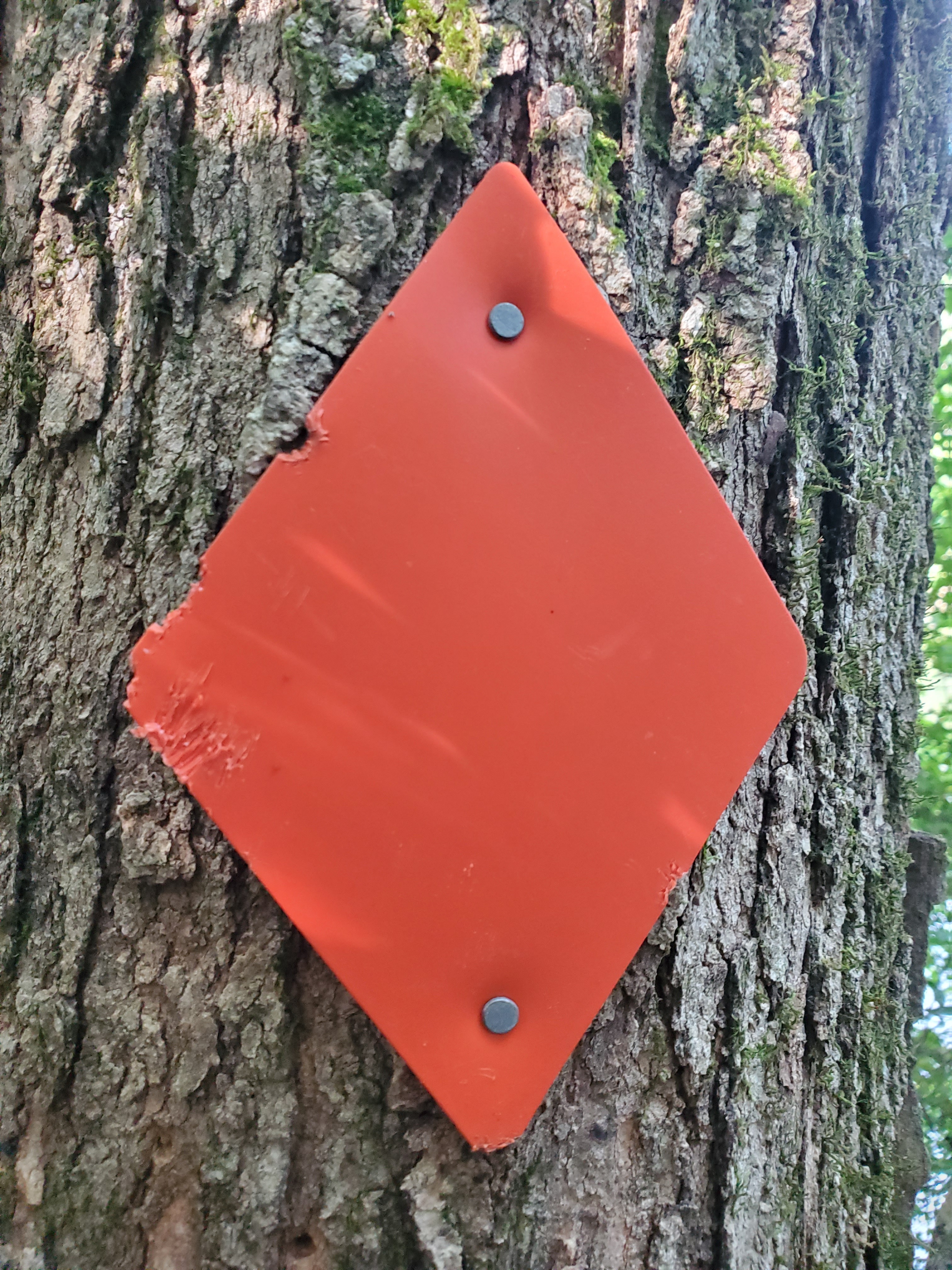
Anyway, in this case since the tree lacks sentience, it wouldn’t have an internalized gender that we could know, but we can see that its sexual characteristics have changed and give it a transexual label. The trans label can cover both.
I think you could say part of one’s identity exists outside of the person.
That doesn’t really make sense to me. It would imply that some part of who you are is defined by outside perception, and I definitely don’t agree with that, especially considering that there are an indefinite number of outside perspectives, and some number of those perspectives could definitely be mutually exclusive with others, making it impossible for them both to be correct.
Simple analogy: if a triangle is viewed ‘face-on’ by one person and directly ‘edge-on’ by another, the former will perceive it as a triangle, and the latter, as a line. Something can’t be a line and a triangle simultaneously, so how can these outside perspectives both be any part of what defines the identity of that object?
Every person who knows you has a concept of you in their minds. This is a part of your identity which you don’t have direct control over, you can only negotiate with them over that.
This concept is intuitively known by everyone. It’s why people are negatively affected when others misgender them.
It’s also true in a formal sense. Part of your identity exists in the formal documents and information about you. This is the part that is vulnerable to identity theft which is painful in ways beyond the financial losses people incur as victims of this crime. Having to prove you are who you say you are is extremely exhausting and traumatizing to deal with despite essentially consisting of a bunch of paperwork and phone calls.
Every person who knows you has a concept of you in their minds.
Yes, of course.
This is a part of your identity
I don’t agree with calling that concept “identity”. Others’ “concept of you” is just that, their idea of you. That does not define you, in any way.
It’s why people are negatively affected when others misgender them.
Actually, I think this bolsters my point, not yours. The whole reason being misgendered is a negative experience is because that person’s “concept of you” is wrong. They see you that way, but that is not the way you are. Your identity comes from you, and you alone.
In the end, it’s obvious we have different definitions of “identity” and that’s what our disagreement is rooted in. I define identity as the sum of what comprises one’s sense of self.
What happens when a person has a brain injury causing retrograde amnesia, or dementia, or Alzheimer’s disease and forget the details of their lives? Are those forgotten aspects of their identity just gone? Or can they live on through their loved ones? What happens when we die and lose all possible sense of self? Is it like we never existed in the first place?
You can indeed become a completely different person when afflicted with Alzheimer’s, dementia, or a brain tumor. It doesn’t retroactively change who you were before, of course…but it can absolutely fundamentally change you.
I never asserted that identity is immutable, nor that only that it is not defined by outside perception of other people.
Right but part of identity is our relationships to other people. If I get Alzheimer’s disease and forget who my mother is, she’s still my mother even though I no longer remember her.
Edit: similarly, my aunt passed way over a decade ago. She’s still a person and still has an identity, even though she’s no longer living.
I think you’re being too strict with your definition of an identity because it is not just one thing. Identities are multi-faceted and fluid. I think that you ignore an important part of the picture when you ignore perceptions of you as part of your identity. They add to a conceptual cloud around you that is you and how you come across to others. I rather like to avoid oversimplification which I feel you are falling for, although I still do believe that one’s own identity is most important of those and ought to be respected by others.
Have you seen the Clayton Biggsby sketch on the Chappelle show with the blind black white supremacist? He had no knowledge of being black, but I think most people would still argue that it formed a major part of his identity regardless of his own concept of himself.
To nuance your previous point, being misgendered is a negative experience because that person’s “concept of you” does not agree with yours, becoming a point of conflict between you two and even inside yourself, not necessarily because they are wrong (although you are free to have that opinion). Sometimes people close to you will know you better than you know yourself.
I think that you ignore an important part of the picture when you ignore perceptions of you as part of your identity.
But I’d argue that allowing those perceptions to shape your identity, to any extent, is equivalent to forfeiting part of who you are to them, and allowing others to define you. That seems really unhealthy to me.
Have you seen the Clayton Biggsby sketch on the Chappelle show with the blind black white supremacist? He had no knowledge of being black, but I think most people would still argue that it formed a major part of his identity regardless of his own concept of himself.
I have, and yeah, I guess I just don’t see it that way. His identity ironically clashed with his biology, but it doesn’t make sense to me that an aspect of yourself you have literally no knowledge of can be considering part of your “identity”.
Maybe I just see the concept of “identity” as borne of, and residing fully in, one’s own consciousness.
Okay but the tree is still trans.
People have no idea what is or isn’t natural. A lot of animals and plants change sex due to various factors during their life.
deleted by creator
A human doesn’t have to cut any pieces off or inject any chemicals to be transgender.
True. I do I think a human could internally decide to be trans, make any or no changes, declare it to others and still be valid as trans. Humans just really value certain observable indicators to tell what’s going on. There’s some kind of interesting metaphor about how humans being this way gives us a lot of interesting freedom to express ourselves but also limits us in many ways overlaid with what the tree is doing.